Recirculating water methods to grow food utilizes a number of different growing “containers”, some traditional which you will be aware of and some that are not so common. I will explain a few of them in this blog article and others in the next article.
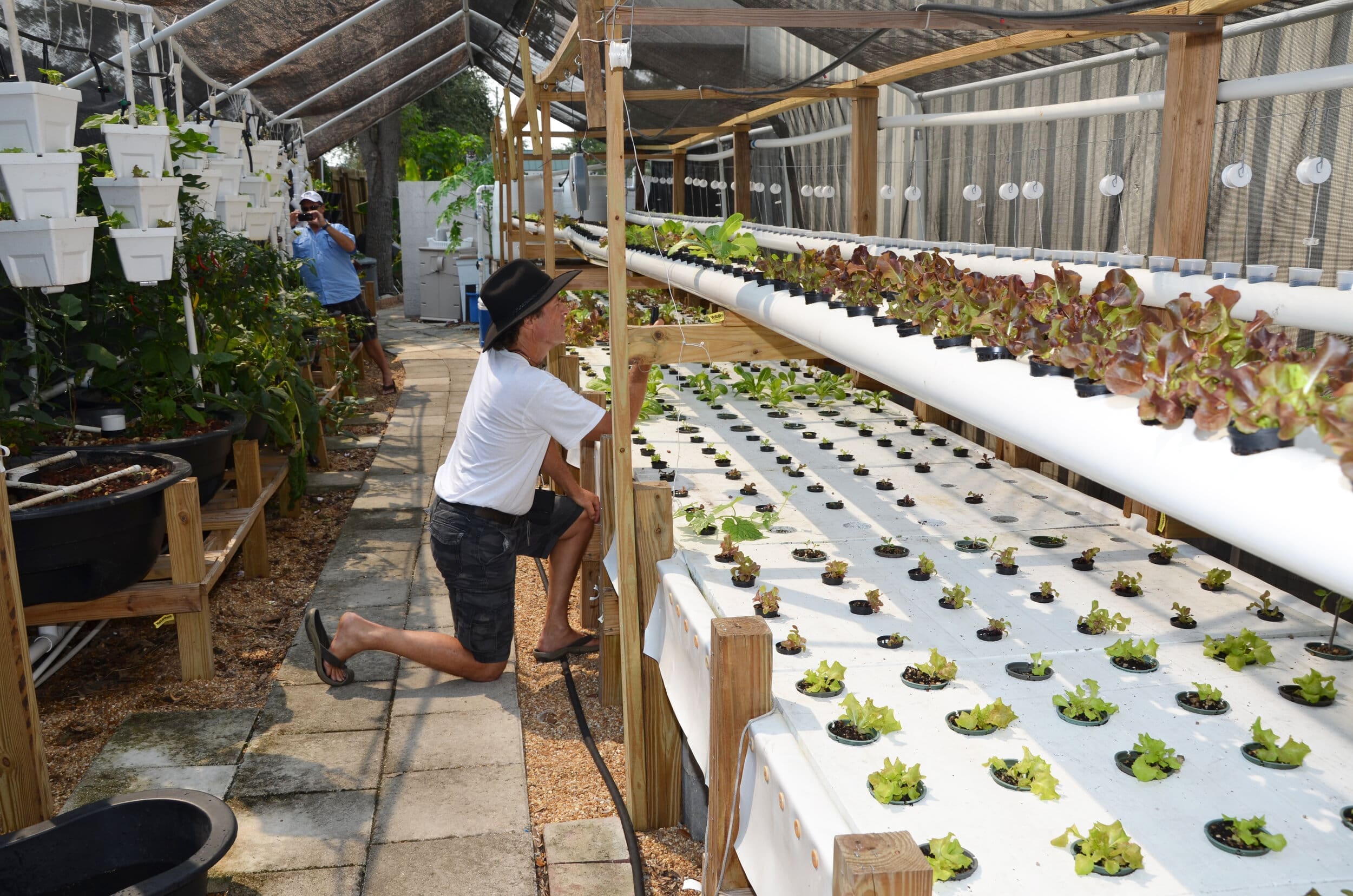
Four growing containers – the “raft system” is shown on the bottom right, the NFT system is shown on the top left, the media bed system is shown on the bottom right and the vertical containers are on the top left (covered in the next blog article). This is a picture from Spring 2011 of Sahib Aquaponics research & training garden in Winter Park, FL.
The Raft System: A raft is basically a structure that enables it to float on water. In the recirculating water food growing methods, these rafts are often made from polystyrene foam which is predrilled to support net containers which hold the plants. The plant roots are suspended in the water below the raft as this is where nutrients are available for them. The water in the containers holding the rafts is aerated and circulated so as to provide a constant flow of oxygen and nutrients to the plant roots, either using Hydroponic or Aquaponics growing methods (or a combination). Depending upon the setup and what is being grown, the depth of the containers can varies from 12 inches (referred to as “Deep Water Culture {DWC}), to 6 inches (referred to as “Shallow Water Culture {SWC}).
The picture above shows a DWC raft bed that is 48 ft long, 4 ft wide and 1 ft deep and being used in my Aquaponics system. I had drilled the holes to insert the 2 inch net pots to grow leafy greens and herbs. Each raft also had a few 3 inch holes drilled to allow me to grow plants that require increased room for the top root ball. You can see small seedlings inserted in the net post with their roots suspended in the water and being feed by the nutrients from the fish waste. I was amazed at the amount of leafy greens and herbs that could be grown with minimum water use as that was being recirculated (used less than 10% of what I would have to use growing the conventional way.
Commercial Aquaponics utilizes the DWC raft system in many of their growing processes as it is the most forgiving and easy method for growing numerous vegetables, herbs and fruits. The large volume of water helps in maintaining overall balance of numerous growing conditions such as the temperature and space for the plant roots thus avoids overcrowding. The Zero Lot or Kitchen Garden system, being more compact given space considerations, incorporates the SWC raft system. This works well as there is constant harvesting of the fresh grown produce and frequent checks to ensure that the system components are operational and water is recirculating as designed.
The raft beds can be purchased or built for individual designs. Small food safe buckets and containers can also be used as DWC containers. These offer numerous options as to providing the roots nutrients using only aeration on including recirculating water.

Plants growing in net pots
Roots are suspended in the water and receive growing nutrients in the aerated water (often recirculating)
Media Beds: These are the same food growing containers that are used in traditional gardening. The main difference in Aquaponics and Hydroponics is that instead of soil, alternative media is used. This grow media is inert (meaning that it contains no nutrients). Examples of such inert media are Rockwool (spun basalt rock fibers that are then formed into slabs), Hydroton (expanded clay shaped in pebbles), river rocks or similar man made rocks and Coconut fibers. At Sahib Aquaponics research and training garden, I started using poly bags and containers lined with filter bags to hold my own “soil” mix and recirculate water by providing the “wicking” technology. This significantly increased the range of food that I could grow, especially root vegetables like carrots.
NFT: A NFT system (Nutrient film technique {NFT} is a hydroponic technique where in a very shallow stream of water containing all the dissolved nutrients required for plant growth is re-circulated past the bare roots of plants in a watertight gully, also known as channels.) The main Blog picture above shows three 48 ft long NFT’s located above the DWC. This growing method is very popular to grow fast harvest vegetables and herbs such as leafy greens. They are suited to indoor growing and are very space efficient. NFT’s require closer monitoring as the narrow space for the roots can easily get clogged and prevent water recirculation. NFT’s of longer lengths require strong support to ensure that they do not lag in the middle and are also prone to significant temperature changes along the length.
Each of these growing containers provide you options to grow a variety of food. You can utilize just one type or all of them.
Please consider making a donation.
Your donations will make a positive impact by enabling us to fund a portion of the costs of the monthly farm tours, host training workshops and provide associated manuals, cover staff costs and assist the building and installation of sustainable food gardens using recirculating farming methods including Aquaponics and Hydroponics. This will empower individuals and communities by providing solutions to end hunger rather than continued continued reliance on food aid.
Feed Hunger Now is a 501(c)3 non profit organization. Donations are tax deductible. Florida State Charity Registration Number CH 41373.
Prefer to donate by check or cash? Please complete our information form and send to:
Feed Hunger Now, P.O.Box 105, Goldenrod, FL 32733 USA

